Posts

Universal Mobile Telecommunications System (UMTS)

In 1988, the European Community (CEC) began a "European Advanced Communications Research (RACE)" development plan by the European 26 research units jointly develop a new generation of mobile communication systems. Called "Universal Mobile Telecommunications System", referred to UMTS, the European Telecommunications Standards Institute (ETSI) is responsible for UMTS standardization work, and with the ITU is responsible for third-generation mobile communication system IMT-2000 standardization work coordinated. Universal Mobile Telecommunications Systems is also known as 3G, a Third Generation Broadband which based on GSM standard. UMTS is use Wide-band Code Division Multiple Access to provide a efficient and bandwidth to mobile network operators. UM TS as a complete 3G mobile communication technology standards, UMTS air interface is not limited to the definition. In addition to WCDMA air interface technology as the preferred access to constantly improve the outsid...
Global System for Mobile Communications (GSM)

Originally the GSM is stand for Groupe Spécial Mobile. Global Systems for Mobile communication is an international standard which are the only type of cellular service available in Europa and also others parts of the world. GSM is a leading digital cellular systems, it was introduce to replace the First generation (1G) analog cellular networks. It use narrowband Time Division Multiple Access (TDMA) which allows 8 simultaneous calls on the same radio frequency. Europe and Asia is using 900MHz band to operate and United States is operate the GSM in 1900MHz. The growth of GSM make the acronym is changing to Global System for Mobile Communications. Features of GSM: • Encryption that make phone calls more secure • Data networking • Group III facsimile Services • Short Message Service (SMS) • Call forwarding • Caller Id • Call waiting • Multi-party conferencing History of GSM • 1982, Conference of European Post and Telegraphs (CEPT) formed a group call GSM to res...

Nokia X Family

Image
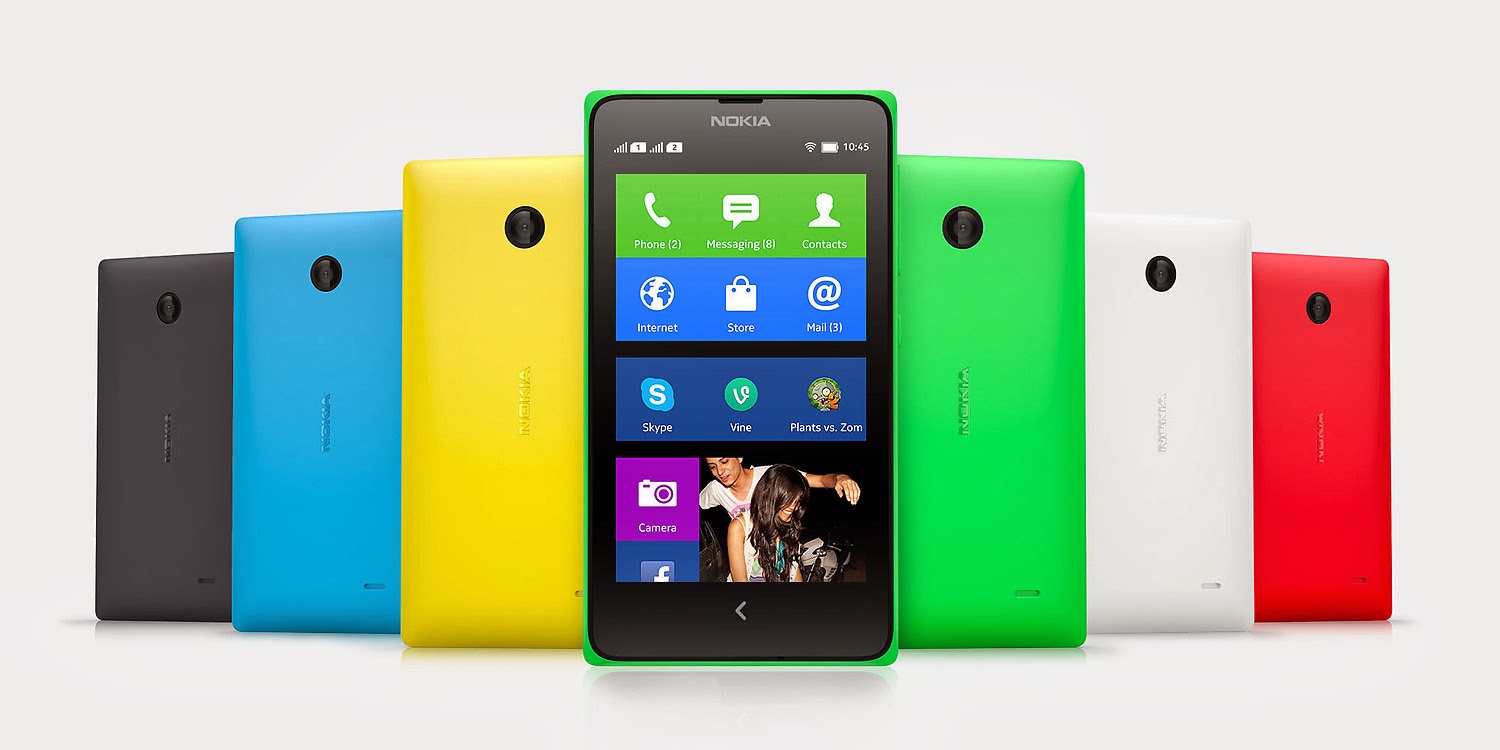
Nokia X smartphones are your Fastlane to Android™ Apps. Available in a luscious array of colours, with durable Nokia build quality. The Color available is Black,Red,Green,Blue,Yellow and White as shown at the picture above. There are 3 variants of Nokia Family which are: Nokia X Nokia X+ Nokia XL The Nokia X will release soon while the others 2 variant may be will only release at the next quarter. What Operating System of Nokia X using? The Nokia X Family Smartphone is using Nokia X OS . Nokia X is a customized platform built on the Android Open Source Project (AOSP), the software stack upon which some of the most popular smartphones in the world are based.It lets you leverage your existing Android apps, while taking advantage of Nokia’s optimizations to help you grab more downloads and generate more revenues in targeted markets. Will your Android app work on Nokia X? There are about 75% of Android apps have been tested by Nokia Store and the apps can...

Embedded System

Image
Embedded system is a digital system that use microprocessor/micro-controller. It run only the specifics functions and usually used as a controller. Embedded system is real-time operation. Embedded systems actually is combination of many devices and sensors to perform certain functions and get result. D/A Conversion – Digital to Analog converter A/D conversion – Analog to digital converter Actuators – type of motor for moving or controlling a mechanism or system Special Purpose field Programmable (FPGA) Application Specific Integrated Circuit (ASIC) Example of Embedded Systems application Anti-lock breaks Auto-focus camera Modems MPEG decoders Network Cards Pagers Cruise Control Common Characteristic Single Functioned which mainly us executes a single program repeatedly Usually is tightly-constraint which low cost,low power, small, fast, etc. It was reactive and real-time application that continually reacts to change...

Remove Ubuntu Startup option

Image
Recently I have installed the windows 8.1 dual boot with Ubuntu. However , the Ubuntu has can't be start up. However when I open My computer, it will still have the start up option . The first thought was uninstall the Ubuntu (Ps: I use wubi installer to install Ubuntu) . After Uninstall the Ubuntu, I restart the computer and found that the startup option of Ubuntu still at there. Ok , let skip the story part to the solution: Run CMD.exe as Administrator (UAC) bcdedit bcdedit/delete {identifier} Example : bcdedit/delete {347989da-7c6c-11e3-bece-001e3123bbd6} In my case is using chinese word ... so in english word should be is identifier. Thank for reading my blogs.Leave comment if you have any others suggestion to remove boot option

Arduino doesn't get recognized (SOLVED)

Image
I face this error when I connect my Arduino to my PC, the windows pop up a say that driver is failed to install. Me download the arduino IDE zip file, and start the IDE. When I want to upload to the arduino the code. It failed and show : avrdude: stk500_getsync(): not in sync: resp=0x00 avrdude: stk500_disable(): protocol error, expect=0x14, resp=0x51 Actually I found that I should download the installer exe instead of the zip file: You can download the windows installer using this link  http://arduino.googlecode.com/files/arduino-1.0.5-r2-windows.exe After You Installed the driver , You should be able to upload the code into the arduino uno. If cannot then you can try to restart your computer. There are many issue instead this, for example may be the USB cable is not compatible or already spoil. You are welcome to leave a comment if you found any solutions that easier or any others issue and solution to share. Thank you.

Firewalls

Image
What is firewalls? Firewalls can be a hardware or software that provide protection to computers and networks. It was a choke point of control and monitoring the computer and networks. It provide restriction on network services for authorized traffic is allowed to access the services. It also is a auditing and controlling access of the devices to use the network resources, which can implement alarms for abnormal behavior. Normally, Firewalls provide 2 basic functions: 1) Packet filtering - Allows or denies transfer of packets based on security policy rules. 2) Application Proxy gateway - Provides network services to users within the firewall Firewall Features Logs access (authorized/unauthorized) in and out of a network Establish a Virtual Private Network (VPN) link to another computer Secures host Within the network to prevent attackers intrusions Filter inappropriate content such as executable mail attachments  Securing Individual Users: Provides anti-virus ...